
What you need to know
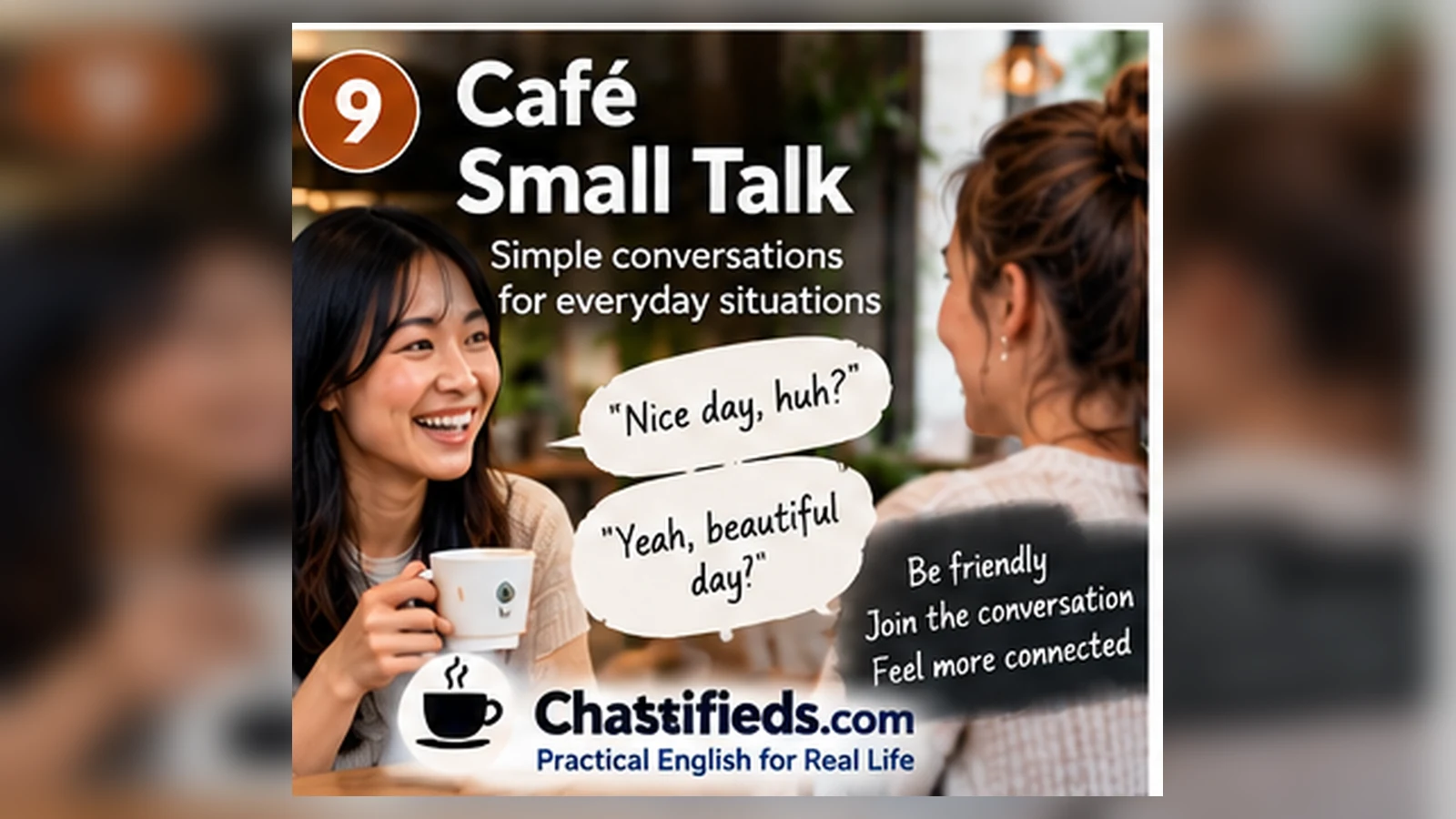
Use short friendly phrases such as "No worries", "Cheers" and "Have a good one". Small talk helps you feel natural, but one short polite sentence is enough.
Understand the Australian context
Australian café talk is often casual and friendly. A barista may ask "How are you going?" while making your drink. A short answer is enough: "Good, thanks. How about you?".
A Monash University article calls "no worries" the "national motto" of Australia. It can answer thanks, apologies and requests, and it is not only a way to say "you are welcome". That is why you will hear it so often at a counter.
You do not need to make long conversation. A smile, a short reply and "Thanks, have a good one" are all it takes to sound friendly.
Key words and phrases
- small talk
- Light, friendly conversation about everyday things.
- No worries
- A friendly reply that can mean "that is okay", "sure" or "you are welcome".
- Cheers
- A casual way to say thanks.
- Have a good one
- A friendly goodbye that wishes someone a good day.
- How are you going?
- A common Australian greeting, similar to "How are you?".
- Good thanks, how about you?
- A polite answer that returns the question.
- You too
- A short reply to "Have a good one".
- recommendation
- A suggestion about what to order.
Conversation practice: friendly small talk
Barista: Hi, how are you going?
Customer: Good thanks, how about you?
Barista: Not bad. What can I get you?
Customer: Could I get a flat white, please? What do you recommend for something sweet?
Barista: The banana bread is popular.
Customer: Great, I will have a slice too.
Barista: No worries. Having here or takeaway?
Customer: Takeaway, thanks.
Barista: Here you go. Have a good one.
Customer: Cheers! Thanks, you too.
Barista: Thanks, see you next time.
Customer: See you!
- "How are you going?" is a greeting. You do not need to describe your day; "Good thanks, how about you?" is enough.
- "Have a good one" is a casual goodbye. A natural reply is "Thanks, you too."
- "No worries" here means "sure". Listen for the tone to know what it means.
More useful phrases
- Good thanks, how about you?
- I am fine, thank you. How are you?Use it: A polite reply to "How are you going?".
- Thanks, have a good one.
- Thank you, and I hope your day goes well.Use it: A friendly way to finish.
- Cheers.
- Thanks.Use it: A casual thank you. You can still say "thank you".
- No worries.
- That is fine. Sure.Use it: A friendly reply to thanks, an apology or a request.
- Thanks, you too.
- Thank you. I hope your day goes well too.Use it: Reply to "Have a good one".
- What do you recommend?
- What should I order?Use it: A friendly way to start a short chat.
- Busy today?
- Is the café busy?Use it: A safe small-talk question while you wait.
- Sorry, could you say that again?
- Please repeat what you said.Use it: Use this when you miss a word.
- See you next time.
- I hope to visit again.Use it: A friendly goodbye for a regular café.
Say it in a real conversation
Use these sentences in a real conversation. The replies you hear will change from place to place.
| When | You can say | It means |
|---|---|---|
| A polite reply to "How are you going?". | Good thanks, how about you? | I am fine, thank you. How are you? |
| A friendly way to finish. | Thanks, have a good one. | Thank you, and I hope your day goes well. |
| A casual thank you. You can still say "thank you". | Cheers. | Thanks. |
| A friendly reply to thanks, an apology or a request. | No worries. | That is fine. Sure. |
| Reply to "Have a good one". | Thanks, you too. | Thank you. I hope your day goes well too. |
| A friendly way to start a short chat. | What do you recommend? | What should I order? |
Listen for the key words in the reply and answer in a short, clear sentence.
Friendly phrases to practise
Friendly thanks
"Thanks, have a good one."
Casual thanks
"Cheers."
Reply politely
"Good thanks, how about you?"
Accept help
"No worries."
End conversation
"Thanks, you too."
Ask for a recommendation
"What do you recommend?"
Say it aloud: a polite reply to "how are you going?"
Saying a sentence out loud before you need it makes real conversations easier. Accents differ, so aim to be clear, not perfect.
- Slow. Read the sentence slowly, one phrase at a time.
- In full. Say: Good thanks, how about you?
- At normal speed. Say it again, as you would in a real conversation.
- Listen. Listen for the key words in the reply.
Practice 1: Role-play with a partner
Situation: You are at the counter and the barista asks how you are going. Reply and then order.
Work with a friend, a classmate or your mirror. One person is the barista. The other is customer. Read the lines, then cover the “You could say” answers and try it from memory. Swap roles.
barista: “Hi, how are you going?”
You could say:
- “Good thanks, how about you?”
- “Thanks, have a good one.”
barista: “Not bad. What can I get you?”
You could say:
- “Could I get a flat white, please? What do you recommend for something sweet?”
- “What do you recommend?”
barista: “The banana bread is popular.”
You could say:
- “Great, I will have a slice too.”
- “Thanks, you too.”
barista: “No worries. Having here or takeaway?”
You could say:
- “Takeaway, thanks.”
- “Good thanks, how about you?”
Challenge: Do the conversation again without looking at the lines, and change one detail.
Practice 2: Fill the gap
Say the missing word or phrase out loud before you open the answer.
What do you ___?
Show answer
recommend — The phrase means: What should I order?
Light, friendly conversation about everyday things. The word is ___.
Show answer
small talk — "small talk": Light, friendly conversation about everyday things.
A friendly reply that can mean "that is okay", "sure" or "you are welcome". The word is ___.
Show answer
No worries — "No worries": A friendly reply that can mean "that is okay", "sure" or "you are welcome".
A casual way to say thanks. The word is ___.
Show answer
Cheers — "Cheers": A casual way to say thanks.
A friendly goodbye that wishes someone a good day. The word is ___.
Show answer
Have a good one — "Have a good one": A friendly goodbye that wishes someone a good day.
A common Australian greeting, similar to "How are you?". The word is ___.
Show answer
How are you going? — "How are you going?": A common Australian greeting, similar to "How are you?".
Common mistakes and better ways to say it
Less helpful: “Fine, and you? (flat tone)”
Try instead: “Good thanks, how about you?”
A warm tone and a complete phrase sound friendlier.
Less helpful: “You are welcome. (for everything)”
Try instead: “No worries.”
"No worries" is the more casual reply to thanks in a café.
Less helpful: “Have a good one. (silence)”
Try instead: “Thanks, you too.”
Reply to a friendly goodbye so the exchange ends warmly.
Less helpful: “A long story about your day”
Try instead: “Good thanks, how about you?”
Café small talk is short. Keep it brief so the line can keep moving.
Friendly but brief
Short, friendly talk is part of café life. It shows you are polite without taking much time. You do not need a clever sentence, just a warm tone.
"No worries" and "cheers" are very common. Learners can use them, but "thank you" is always fine too. If a phrase surprises you, listen to how the barista says it and copy that.
Advertisement
Real-life mission
Practise friendly café talk.
You do not need to buy anything. Saying the sentences aloud is good practice.
Phrase Wall practice: phrases to own
Open a phrase to see it on the Phrase Wall, practise it, and save it to My Learning.
- “Thanks, have a good one.”Thank you, and I hope your day goes well.
- “Cheers.”Thanks.
- “Busy today?”Is the café busy?