
What you need to know
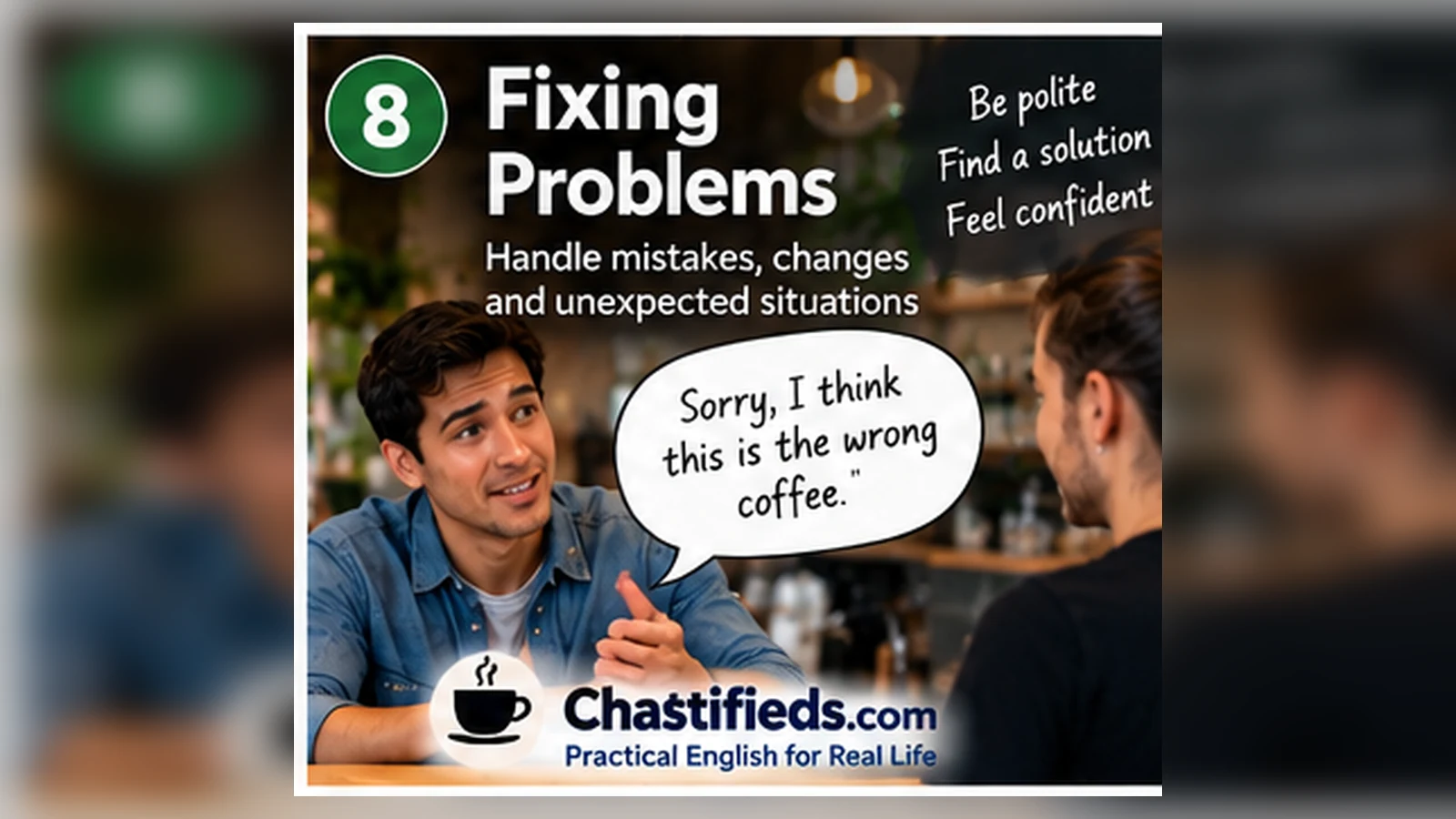
If your drink is wrong, start gently ("Sorry, I think this might be the wrong coffee"), be specific ("I ordered oat milk"), then ask for a solution ("Could this be remade, please?"). Keep your explanation short and calm.
Understand the Australian context
A wrong drink, wrong milk or wrong size is common in a busy café. A calm, short explanation is more effective than a long complaint. Most baristas will fix it.
Use three steps: start gently by saying you think there is a mistake, be specific about the milk or size, and ask for a solution such as a remake. A softer opening ("I think") keeps the tone friendly.
If the issue is an allergy or the drink has dairy and you cannot have it, tell staff clearly and do not drink it. For consumer rights information, see the ACCC page.
Key words and phrases
- remake
- Make again.
- mistake
- Something done wrongly.
- wrong coffee
- A different drink from what you ordered.
- specific
- Clear and exact.
- dairy
- Milk products.
- Could this be remade?
- Could you make this again?
- mix-up
- A confusion between orders.
- apologise
- Say sorry.
Conversation practice: fixing a wrong order
Customer: Sorry, I think this might be the wrong coffee.
Barista: Oh, sorry. What did you order?
Customer: A small oat flat white.
Barista: Ah, this one has dairy. I will remake it.
Customer: Thanks. I asked for a small and this looks larger.
Barista: No worries, I will check the size too.
Customer: Could this be remade, please?
Barista: Of course. It will be a few minutes.
Customer: That is fine, thank you.
Barista: Sorry about the mix-up.
Customer: No problem. Thanks for fixing it.
Barista: Cheers.
- "I think" softens the opening.
- The customer states both the milk and the size problem.
- "Thanks for fixing it" ends the conversation kindly.
More useful phrases
- Sorry, I think this might be the wrong coffee.
- I think there is a mistake.Use it: Start gently.
- I ordered oat milk.
- My milk should be oat.Use it: Be specific.
- I asked for a small.
- My size should be small.Use it: Be specific.
- Could this be remade, please?
- Could you make it again?Use it: Ask for a remake.
- Could you check my order?
- Please look at the order.Use it: Ask for a check.
- I cannot have dairy.
- Dairy is a problem for me.Use it: Say it clearly.
- Thanks for fixing it.
- Thank you for helping.Use it: Finish kindly.
- Sorry, could you say that again?
- Please repeat what you said.Use it: Use this when you miss a word.
- Thanks, have a good one.
- Thank you, and I hope your day goes well.Use it: A friendly way to finish.
Say it in a real conversation
Use these sentences in a real conversation. The replies you hear will change from place to place.
| When | You can say | It means |
|---|---|---|
| Start gently. | Sorry, I think this might be the wrong coffee. | I think there is a mistake. |
| Be specific. | I ordered oat milk. | My milk should be oat. |
| Be specific. | I asked for a small. | My size should be small. |
| Ask for a remake. | Could this be remade, please? | Could you make it again? |
| Ask for a check. | Could you check my order? | Please look at the order. |
| Say it clearly. | I cannot have dairy. | Dairy is a problem for me. |
Listen for the key words in the reply and answer in a short, clear sentence.
Useful words at a glance
| Step | What to do | What you can say |
|---|---|---|
| Start gently | Say you think there is a mistake. | “Sorry, I think this might be the wrong coffee.” |
| Be specific | Say milk or size. | “I ordered oat milk.” / “I asked for a small.” |
| Ask for a solution | Ask for a remake. | “Could this be remade, please?” |
Say it aloud: start gently
Saying a sentence out loud before you need it makes real conversations easier. Accents differ, so aim to be clear, not perfect.
- Slow. Read the sentence slowly, one phrase at a time.
- In full. Say: Sorry, I think this might be the wrong coffee.
- At normal speed. Say it again, as you would in a real conversation.
- Listen. Listen for the key words in the reply.
Practice 1: Role-play with a partner
Situation: Your drink has dairy but you ordered oat milk. Say what is wrong and ask for a remake.
Work with a friend, a classmate or your mirror. One person is the barista. The other is customer. Read the lines, then cover the “You could say” answers and try it from memory. Swap roles.
barista: “Hi, how can I help?”
You could say:
- “Sorry, I think this might be the wrong coffee.”
- “Could this be remade, please?”
barista: “Oh, sorry. What did you order?”
You could say:
- “A small oat flat white.”
- “I asked for a small.”
barista: “Ah, this one has dairy. I will remake it.”
You could say:
- “Thanks. I asked for a small and this looks larger.”
- “Sorry, I think this might be the wrong coffee.”
barista: “No worries, I will check the size too.”
You could say:
- “Could this be remade, please?”
- “Could you check my order?”
Challenge: Do the conversation again without looking at the lines, and change one detail.
Practice 2: Fill the gap
Say the missing word or phrase out loud before you open the answer.
Sorry, I think this might be the wrong ___.
Show answer
coffee — The phrase means: I think there is a mistake.
I ___ oat milk.
Show answer
ordered — The phrase means: My milk should be oat.
I asked for a ___.
Show answer
small — The phrase means: My size should be small.
Could this be ___, please?
Show answer
remade — The phrase means: Could you make it again?
Could you check my ___?
Show answer
order — The phrase means: Please look at the order.
I ___ have dairy.
Show answer
cannot — The phrase means: Dairy is a problem for me.
Common mistakes and better ways to say it
Less helpful: “You made a mistake.”
Try instead: “Sorry, I think this might be the wrong coffee.”
Start gently.
Less helpful: “This is terrible.”
Try instead: “I ordered oat milk. Could this be remade, please?”
Be specific and ask for a fix.
Less helpful: “Giving me another.”
Try instead: “Could this be remade, please?”
A polite request is clearer.
Less helpful: “A long angry explanation.”
Try instead: “Keep it short and calm.”
Short is more effective.
Polite and direct
Most Australian baristas are happy to remake a drink. A friendly tone and one clear sentence usually solve it quickly.
If you cannot have dairy for health reasons, say so clearly. This lesson is English practice, not medical advice.
Advertisement
Real-life mission
Practise the three steps.
You do not need to buy anything. Saying the sentences aloud is good practice.
Phrase Wall practice: phrases to own
Open a phrase to see it on the Phrase Wall, practise it, and save it to My Learning.
- “Could this be remade, please?”Could you make it again?
- “Sorry, I think this might be the wrong coffee.”I think there is a mistake.
- “I ordered oat milk.”My milk should be oat.