
What you need to know
Reply to "How are you going?" with "Good, thanks. How about you?" Say "Thanks, that was delicious" and "Thanks, have a good night." You can say "No worries" and "Cheers" to be friendly.
Friendly words that fit a restaurant
Staff often start with "How are you going?" or "How's your day?" This is a greeting, not a deep question. A short reply is best: "Good, thanks. How about you?" You do not need to give a long answer.
During the meal staff may ask "How is everything?" or "Is everything okay?" Say "Yes, great, thanks" or "It's delicious." If something is wrong, see Make a Complaint or Leave a Review.
At the end say "Thanks, that was lovely" and "Have a good night." Australians often say "No worries" for "you're welcome" or "it's fine", and "Cheers" for thanks or goodbye. "See you later" is a friendly goodbye even if you will not meet again.
If you do not understand, say "Sorry, could you say that again?" Staff are used to it. For ordering words, see Ordering Food and Drinks.
For similar friendly chat in a cafe or supermarket, see Australian Cafe Small Talk and Supermarket Small Talk.
Key words and phrases
- small talk
- Short, friendly chat.
- How are you going?
- A greeting that means How are you?
- No worries
- You're welcome, or it's fine.
- Cheers
- Thanks, or goodbye. Also said when drinking.
- lovely
- Very nice.
- delicious
- Tasting very good.
- Enjoy!
- Staff say it when they bring food.
- Have a good one
- A friendly goodbye.
- See you later
- A friendly goodbye.
- mate
- A friendly word for a friend or person.
Dialogue: friendly chat during a meal
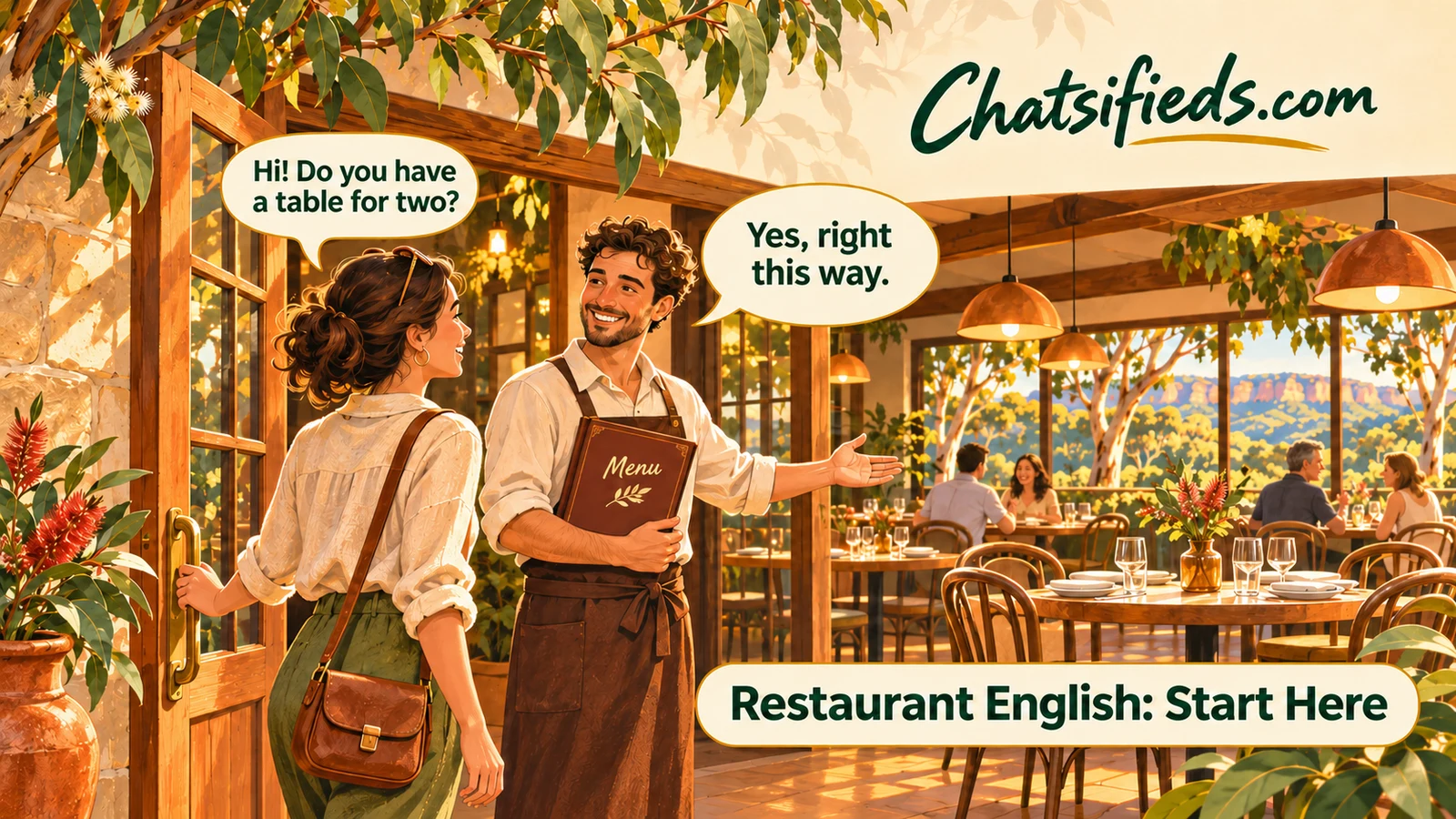
Waiter: Hi there! How are you going?
Customer: Good, thanks. How about you?
Waiter: Not bad, thanks. Are you ready to order?
Customer: Yes, please. Could I get the chicken parma?
Waiter: Great choice. Enjoy your meal.
Customer: Thanks.
Waiter: How is everything?
Customer: It's delicious, thanks.
Waiter: Awesome. Can I get you anything else?
Customer: No, thanks. Just the bill, please.
Waiter: No worries. Here you go.
Customer: Thanks, that was lovely.
Waiter: Thanks for coming. Have a good night.
Customer: You too. Cheers!
- "How are you going?" is a greeting. Reply briefly.
- "No worries" means it is fine or you're welcome.
- "Have a good night" is a friendly goodbye.
- "Cheers" can mean thanks or goodbye.
More useful phrases
- Good, thanks. How about you?
- Replies to a greeting.Use it: At the start.
- It's delicious, thanks.
- Says the food is good.Use it: When staff ask.
- Yes, great, thanks.
- Says all is fine.Use it: When staff ask.
- Thanks, that was lovely.
- Thanks staff.Use it: At the end.
- No worries.
- Says it is fine.Use it: When staff say sorry or thanks.
- Have a good night.
- A friendly goodbye.Use it: When you leave.
- You too.
- Returns a greeting.Use it: After staff say it.
- Sorry, could you say that again?
- Asks for repeating.Use it: When you do not understand.
- Cheers!
- Says thanks or goodbye.Use it: In a casual moment.
Friendly phrases and replies
Choose the phrase that fits the moment.
| Staff say | You can say | Meaning |
|---|---|---|
| How are you going? | Good, thanks. How about you? | A greeting. |
| How is everything? | It's delicious, thanks. | They check the meal. |
| Enjoy your meal. | Thanks, you too. | A friendly wish. |
| Thanks for coming. | Thanks, that was lovely. | A goodbye. |
| Have a good night. | You too. Cheers! | A goodbye. |
| Sorry about the wait. | No worries. | It is fine. |
Short and friendly is best.
Say it aloud: replying to a greeting
Saying a sentence out loud before you need it makes real conversations easier. Accents differ, so aim to be clear, not perfect.
- Slow. Read the sentence slowly, one phrase at a time.
- In full. Say: Good, thanks. How about you?
- At normal speed. Say it again, as you would in a real conversation.
- Listen. Listen for "How are you going?" and "How is everything?".
Practice 1: Role-play with a partner
Situation: You are having dinner at a restaurant. The waiter is friendly.
Work with a friend, a classmate or your mirror. One person is the waiter. The other is a customer. Read the lines, then cover the “You could say” answers and try it from memory. Swap roles.
waiter: “Hi there! How are you going?”
You could say:
- “Good, thanks. How about you?”
- “Pretty good, thanks.”
waiter: “Are you ready to order?”
You could say:
- “Yes, please. Could I get the chicken parma?”
- “Not yet. Could we have a few more minutes?”
waiter: “How is everything?”
You could say:
- “It's delicious, thanks.”
- “Yes, great, thanks.”
waiter: “Anything else?”
You could say:
- “No, thanks. Just the bill, please.”
- “No, that's all.”
waiter: “Thanks for coming. Have a good night.”
You could say:
- “You too. Cheers!”
- “Thanks, that was lovely.”
Challenge: Do the role-play again, but you do not understand. Say: "Sorry, could you say that again?"
Practice 2: Fill the gap
Say the missing word or phrase out loud before you open the answer.
How are you ___?
Show answer
going — A greeting.
Good, thanks. How about ___?
Show answer
you — Return the question.
It's ___, thanks.
Show answer
delicious — Say the food is good.
No ___.
Show answer
worries — Means it is fine.
Have a good ___.
Show answer
night — A goodbye.
___, that was lovely.
Show answer
Thanks — Thank staff.
Common mistakes and better ways to say it
Less helpful: “(giving a long answer to How are you going?)”
Try instead: “Good, thanks. How about you?”
It is a greeting.
Less helpful: “(saying nothing when the food is good)”
Try instead: “It's delicious, thanks.”
A kind word helps.
Less helpful: “(not understanding but staying silent)”
Try instead: “Sorry, could you say that again?”
Staff are happy to repeat.
Less helpful: “(leaving without a goodbye)”
Try instead: “Thanks, have a good night.”
A short goodbye is polite.
Culture note: friendly but short
Australian service is often friendly and relaxed. Staff may use first names, joke a little and say "mate". You can be friendly in return.
A quick "Thanks" or "Cheers" is common when staff bring food or clear plates. You do not need to speak long. See Tipping, Service Charges and Public Holiday Surcharges for tipping.
Tone matters. A smile and a calm voice make short phrases sound warm.
Advertisement
Real-life mission
Practise small talk this week. Tick each step.
Short and friendly is best.
Phrase Wall practice: phrases to own
Open a phrase to see it on the Phrase Wall, practise it, and save it to My Learning.
- “Good, thanks. How about you?”Replies to a greeting.
- “It's delicious, thanks.”Says the food is good.
- “Thanks, that was lovely. Have a good night.”A friendly goodbye.
- “Sorry, could you say that again?”Asks staff to repeat.