
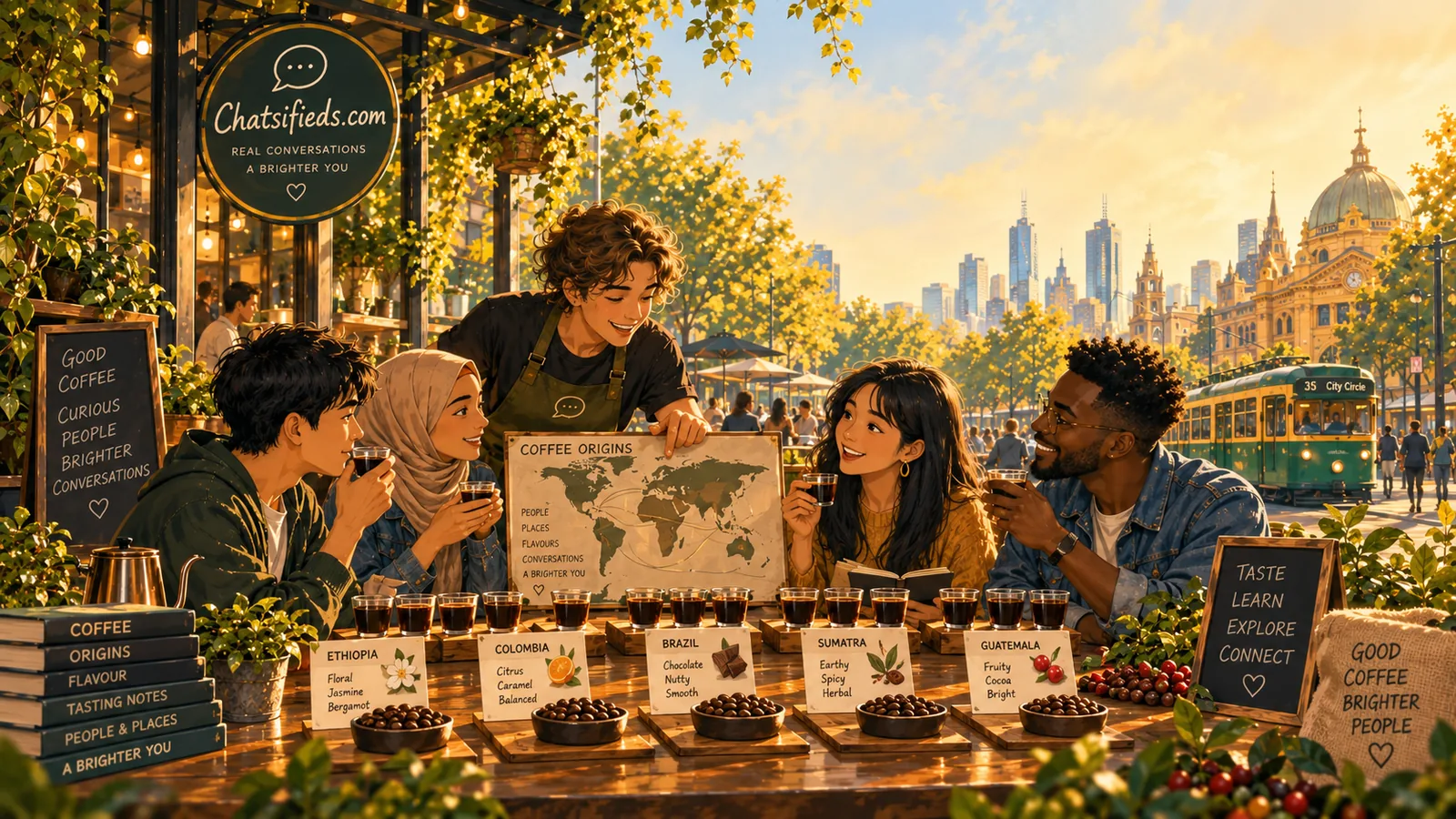
What you need to know
A coffee label can read like a geography lesson: country, region, producer or farm, washing station, variety, process and lot. You do not need to memorise it. Learn the hierarchy (country, region, producer, lot) and take one useful detail at a time.
Understand the Australian context
The broadest origin clue is the country, such as Ethiopia or Colombia. A region is a narrower area inside the country, such as Guji. A producer, farm or washing station says who grew or processed the coffee, and a lot is a separate batch.
Not every label gives the same level of detail. Some bags give only the country. Others name the region, the producer and the lot. More detail tells you more about where the coffee came from, but it does not by itself tell you whether you will like it.
Process (for example washed or natural) is not a location, but it often appears next to the origin. A good strategy is to choose one detail and ask one question about it.
Key words and phrases
- origin
- Where the coffee was grown.
- country
- The broadest origin level.
- region
- An area inside the country.
- producer
- The farmer or group who grew the coffee.
- washing station
- A place where coffee cherries are processed.
- lot
- A separated batch of coffee.
- variety
- A type of coffee plant.
- traceability
- How much you can find out about where coffee came from.
Conversation practice: asking about the origin on a label
Customer: Hi. What does this label mean? It says Ethiopia, Guji.
Barista: Ethiopia is the country, and Guji is the region.
Customer: Okay. What is this other line?
Barista: That is the washing station. It is where the coffee was processed.
Customer: And lot number?
Barista: A lot is a separate batch of coffee.
Customer: Do I need to understand all of it?
Barista: No. Pick one detail. What do you like, fruity or chocolatey?
Customer: Fruity, I think.
Barista: Then this one is a good choice.
Customer: Great. I will take a bag, please.
Barista: Sure. Whole beans or ground?
- The barista explains the label line by line, from broad to narrow.
- "Pick one detail" is a useful strategy. You do not need to use every line.
- "Whole beans or ground?" is a common shop question. Say the brewer you use, not only "ground".
More useful phrases
- Where is this one from?
- What is the origin?Use it: A natural question at the counter.
- What does this label mean?
- Please explain the words on the bag.Use it: Use this when you do not understand a label.
- Which region is this?
- Which part of the country?Use it: Ask about the second level.
- Who grew this coffee?
- Which producer or farm?Use it: Ask about the producer.
- What is a lot?
- What does lot mean?Use it: Ask about a word you do not know.
- Is this a washed coffee?
- How was it processed?Use it: Ask about the process.
- What does it taste like?
- How does it taste?Use it: The most useful question of all.
- Sorry, could you say that again?
- Please repeat what you said.Use it: Use this when you miss a word.
- Thanks, have a good one.
- Thank you, and I hope your day goes well.Use it: A friendly way to finish a conversation.
Say it in a real conversation
Use these sentences in a real conversation. The replies you hear will change from place to place.
| When | You can say | It means |
|---|---|---|
| A natural question at the counter. | Where is this one from? | What is the origin? |
| Use this when you do not understand a label. | What does this label mean? | Please explain the words on the bag. |
| Ask about the second level. | Which region is this? | Which part of the country? |
| Ask about the producer. | Who grew this coffee? | Which producer or farm? |
| Ask about a word you do not know. | What is a lot? | What does lot mean? |
| Ask about the process. | Is this a washed coffee? | How was it processed? |
Listen for the key words in the reply and answer in a short, clear sentence.
Useful words at a glance
| Level | What it tells you | Example from this lesson |
|---|---|---|
| Country | The broadest level. | Ethiopia |
| Region | A narrower area inside the country. | Guji |
| Producer, farm or washing station | Who grew or processed the coffee. | A producer name or washing station |
| Lot | A specific batch. | A specific lot |
Say it aloud: a natural question at the counter
Saying a sentence out loud before you need it makes real conversations easier. Accents differ, so aim to be clear, not perfect.
- Slow. Read the sentence slowly, one phrase at a time.
- In full. Say: Where is this one from?
- At normal speed. Say it again, as you would in a real conversation.
- Listen. Listen for the key words in the reply.
Practice 1: Role-play with a partner
Situation: You are holding a coffee bag with Ethiopia, Guji, a washing station and a lot number. Ask the barista what the label means.
Work with a friend, a classmate or your mirror. One person is the barista. The other is customer. Read the lines, then cover the “You could say” answers and try it from memory. Swap roles.
barista: “Hi, how can I help?”
You could say:
- “Hi. What does this label mean? It says Ethiopia, Guji.”
- “Which region is this?”
barista: “Ethiopia is the country, and Guji is the region.”
You could say:
- “Okay. What is this other line?”
- “Where is this one from?”
barista: “That is the washing station. It is where the coffee was processed.”
You could say:
- “And lot number?”
- “What is a lot?”
barista: “A lot is a separate batch of coffee.”
You could say:
- “Do I need to understand all of it?”
- “What does it taste like?”
Challenge: Do the conversation again without looking at the lines, and change one detail.
Practice 2: Fill the gap
Say the missing word or phrase out loud before you open the answer.
What does this ___ mean?
Show answer
label — The phrase means: Please explain the words on the bag.
Which ___ is this?
Show answer
region — The phrase means: Which part of the country?
Who grew this ___?
Show answer
coffee — The phrase means: Which producer or farm?
Is this a washed ___?
Show answer
coffee — The phrase means: How was it processed?
What does it ___ like?
Show answer
taste — The phrase means: How does it taste?
Where the coffee was grown. The word is ___.
Show answer
origin — "origin": Where the coffee was grown.
Common mistakes and better ways to say it
Less helpful: “This coffee country is Guji.”
Try instead: “Ethiopia is the country and Guji is the region.”
Country and region are different levels.
Less helpful: “Every bag tells the same details.”
Try instead: “Some bags give more detail than others.”
Traceability differs between labels.
Less helpful: “I must understand every word.”
Try instead: “I will pick one detail and ask one question.”
The goal is useful communication, not memorising all farms.
Less helpful: “A lot is a large cup.”
Try instead: “A lot is a separate batch of coffee.”
"Lot" here means a batch, not a size.
From country to lot
Specialty roasters in Australian cities often give detailed origin information because customers like to know where the coffee came from. You may see a producer name or a lot number on the bag.
Detail is optional. You can enjoy the coffee without knowing the lot. Ask about one line at a time, and let the barista explain the rest.
Advertisement
Real-life mission
Read an origin label.
You do not need to buy anything. Saying the sentences aloud is good practice.
Phrase Wall practice: phrases to own
Open a phrase to see it on the Phrase Wall, practise it, and save it to My Learning.
- “What does this label mean?”Please explain the words on the bag.
- “Which region is this?”Which part of the country?
- “Who grew this coffee?”Which producer or farm?